The Bletchley Park problem with AI in private equity
Private equity doesn't have a technology problem. It has a context problem
Feb 24, 2026
Danny Goldman

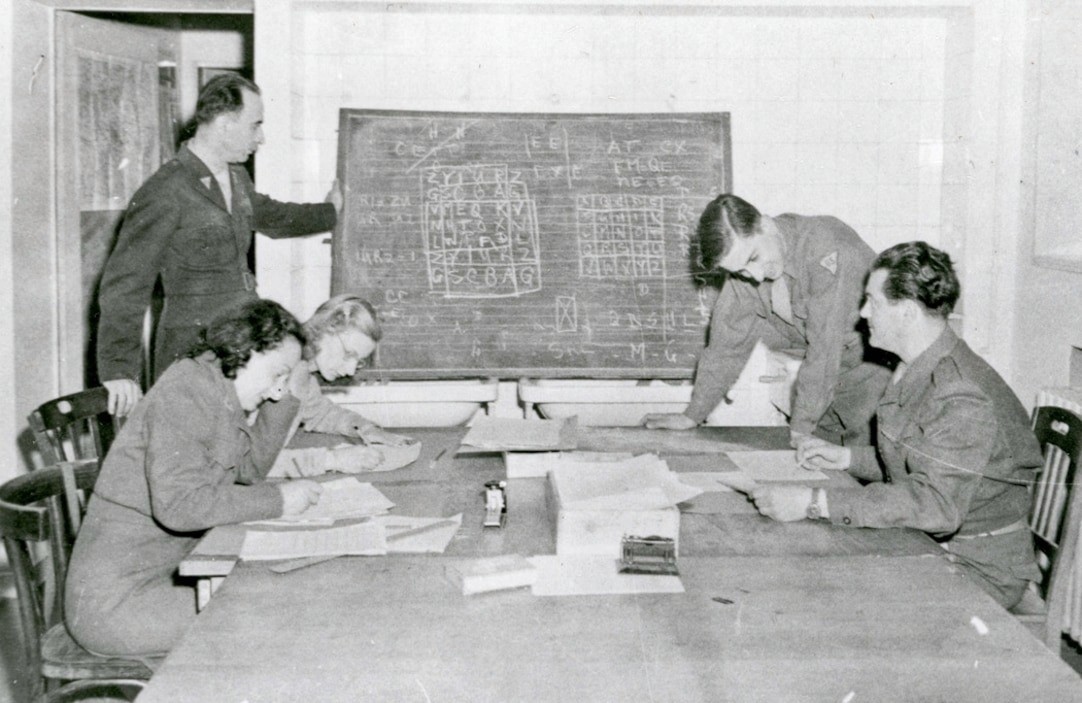
At Bletchley Park during World War II, the codebreaking machines built to crack Enigma had extraordinary raw processing power, but on their own they were essentially useless. The Enigma encryption had over 158 quintillion possible settings, reconfigured every twenty-four hours – brute force was out of the question, no matter how fast the machines ran.
The breakthroughs didn't come from building faster machines. They came from building a body of contextual knowledge around them. The codebreakers maintained detailed indexes of every person, ship, unit, and technical term that had appeared in previously decoded messages. They studied the habits of individual German operators, and when they needed contextual inputs they didn't have, the RAF would plant sea mines in areas the Germans had already swept, forcing operators to transmit predictable messages – essentially manufacturing context. Each decoded message made the next one easier to crack. The codebreakers had a saying for it: "nothing succeeds like success."
The stakes are obviously not comparable, but the core challenge is the same one facing private equity in adopting AI. Most firms have given themselves an incredibly capable Day 1 analyst. Except it never makes it to Day 2. Every morning, it resets – no memory of yesterday, no accumulation of context, no compounding. It doesn't know what deals the firm has seen, what the partners care about, what the portfolio has learned, or how the IC actually makes decisions. It doesn't even remember what's happening on the deals it's already working on. A real Day 1 analyst starts absorbing all of that from their first week. This one never will, no matter how smart it is.
I had a conversation earlier this month with a principal leading AI initiatives at a top middle market firm that illustrates this well. His team rolled out ChatGPT Enterprise about eight months ago, and it quickly became a daily driver for most of the firm. People genuinely liked it for drafting, summarization, brainstorming – the kinds of tasks where raw intelligence is enough. But whenever the team tried to hand off something more substantive, like properly screening a new opportunity or prepping for an investment committee meeting, the output hit the same wall every time. He put it well: "It gives us back exactly what we'd get from a smart person who's never worked in PE and knows nothing about our firm. Which is, I guess, exactly what it is."
I've heard some version of this from dozens of firms over the past three years of building in this space, and the standard explanations – that the models need to get better, that teams need to improve their prompt engineering, that PE work is simply too nuanced for AI – miss what's actually going on. The models are extraordinary. Opus 4.6, GPT-5.2, and Gemini 3.1 can build a fully functioning application in minutes with limited direction – reasoning through a CIM or synthesizing a hundred pages of diligence materials is the equivalent of LLM 5th grade. Teams are right to be using them daily, and they'll keep getting better, but the gap isn't in what the models can do – it's in what they have access to. GPT-6 won't fix that.
A lot of firms have taken a first step by connecting ChatGPT or Claude to a shared drive, which is smart, but it gets them less far than most expect. Searching files and actually understanding a firm's context are very different problems, one that is worth its own post down the road.
There's an irony here, though: the firms that feel like they've had the most success with AI – high adoption, team loves it, strong usage numbers – might actually be the ones most at risk of plateauing. When AI is great at the 60% of work that doesn't require firm context, it's easy to conclude that the rollout worked. But it can mask the fact that the 40% where AI could be transformative – the work that actually drives investment decisions – is still completely untouched. Success on the easy can become a reason not to push on the hard.
And meanwhile, the firm's AI resets to zero every morning – no memory of what it learned yesterday, no accumulation of the firm's collective knowledge, no compounding. The question worth asking is what it would look like if it didn't.